
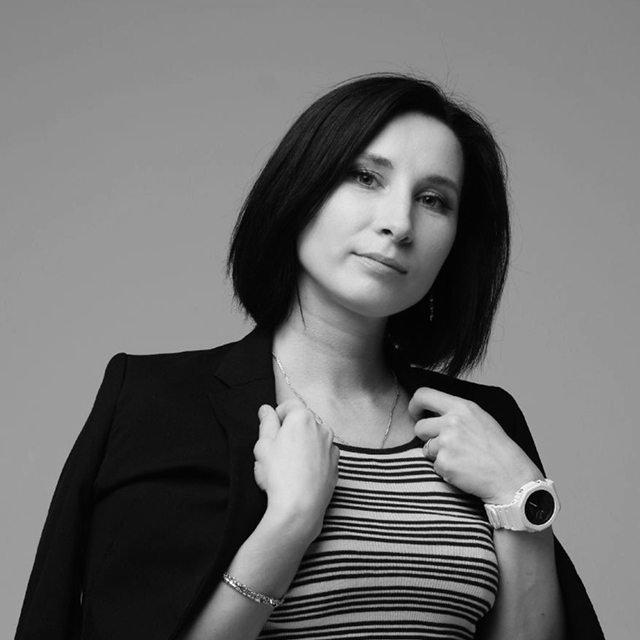
HR Director Yulia Karvat started as a psychologist and then spent 11+ years in HR across construction, automotive, logistics, manufacturing (Santa Bremor, Coca-Cola HBC) and IT. Today she runs the HR KULUAR Telegram channel and consults companies on organizational culture and CEO–HR alignment.
If you want to understand how CEO mindset shapes culture, what HR’s real job is beyond “cookies and coffee”, and how to lead organizational change without burning people out, you’ll find field-tested stories here.
From Psychology to HR Leadership: Tools that Scale
1. You spent three years as a psychologist before entering Corporate HR. What habits did you have to unlearn immediately?
It’s a total paradigm shift. As a psychologist, your allegiance is to the client—you empathize with their specific pain and move at their pace. In HR, your allegiance is to the business. The focus shifts from "How does this person feel?" to "How do we maximize this person's professional potential to meet company goals?"
2. But surely a psychology background helps in HR? What tools do you keep?
I actually actively oppose the use of clinical psychological tools in HR. It is alarmingly popular for HR managers to turn employees into "guinea pigs" with 500-question personality inventories or asking candidates to "draw a tree."
Using clinical diagnostics instead of management-specific assessment tools damages the business, alienates staff, and turns the HR profession into a laughingstock. We’ve all heard the horror stories.
What I did keep: Active listening and the ability to ask the right question. These are non-negotiable for conflict resolution and interviewing. But leave the Rorschach tests at home.
Climbing to HR Director: Career Growth Without “Silver Bullets”
3. You climbed from a Specialist to an HR Director. What is the secret to that leap?
Honestly? Becoming an HRD is easy. Being a competent professional is the hard part.
My goal was never just the title; it was professional utility. I worked hard because I genuinely wanted to help businesses succeed. To bridge that gap, you need constant learning and what I call "visual experience"—you need to see how companies of different sizes and industries operate to build true expertise.
4. Do you have a "Silver Bullet" method that works for every company?
Absolutely not. I don’t carry a "pre-packed emergency kit" of methods that I force onto a client just because I know them well.
I always start from the owner's specific request. What worked in a mature corporation might destroy a startup. You have to adapt, not copy-paste.
“Becoming an HRD is easy. Being a competent professional is the hard part.”
How CEOs Shape Culture (and Why HR Can’t Just Say “Yes”)
5. In your experience, what is the single biggest barrier to organizational change?
In any company, almost everything depends on the "First Person"—the owner or CEO. Employees can feel exactly how the CEO is tuned.
You can implement the best HR frameworks in the world, but if the owner isn't ready to shoulder the responsibility of transformation or weather the resistance, the project is dead on arrival. I’ve learned to walk away from clients where the CEO wants change but isn't willing to lead it.
6. You’ve mentioned a major disconnect between Owners and Employees. What is the one thing owners still don't get?
Owners often expect employees to have the same level of dedication and self-sacrifice as they do.
Here is the hard truth: employees are hired help. They are there to fulfill a contract in exchange for money. They are not obligated to work weekends, sacrifice family time, or "die for the cause." When owners fail to understand this boundary, toxic conflict is inevitable.
7. What about the "Yes-Man" HR?
This is a dangerous trend. I see HRs becoming "servants of the sovereign", agreeing with every emotional whim of the CEO to stay in their good graces.
The CEO feels great initially because their ego is stroked. Meanwhile, the employer brand rots, and top talent flees. Eventually, the HR leaves with a fat bonus, and the CEO is left with a broken company.
Advice to CEOs: Be very suspicious if your HR Director agrees with everything you say. Our job is to offer a reality check, not a rubber stamp.
“You can implement the best HR frameworks in the world, but if the owner isn’t ready to lead the transformation, the project is dead on arrival.”
Culture Across Industries: Construction, IT and Coca-Cola
8. Construction vs. IT vs. Coca-Cola. Is the culture really that different?
I don’t believe in "industry specificity" regarding people. People are people. Their basic needs and anxieties are identical whether they are pouring concrete or writing code.
The real differentiator isn't the industry; it’s the organizational maturity (referencing Adizes’ lifecycles). I prefer working with mature organizations that have survived their corporate "infancy."
9. What did the "Big system" at Coca-Cola teach you?
It taught me the power of alignment. It’s a unique world where the team works with a specific "spark" in their eyes. That experience proved that high productivity comes from a strong, unified corporate spirit. It raised the bar for my own professional output forever.
Meaningful Work vs Perks: What Really Improves Employee Retention
10. Let’s talk motivation. What is currently undervalued?
Forget the "coffee and cookies." Intrinsic motivation is king.
Based on the research of Sheila Richie and Peter Martin the strongest driver is interest and utility. People need to feel their work is interesting and, crucially, that it serves a purpose.
As we show in our guide to Employee retention strategies, perks alone rarely keep people for long.
AI and Automation in HR: Tools That Help (and Hurt) Culture
11. Is AI a threat to the HR profession?
Not at all. It’s a tool. Think of it like a scalpel: in the hands of a surgeon, it saves lives; in the hands of an amateur, it maims.
I happily delegate drafting documents and systematizing data to AI. However, using AI to screen candidates without a human recruiter who actually understands the nuance of interviewing? That’s suicide for your hiring process.
Deeper use cases and guardrails: AI in HR 2026 and 2026: Best AI HR Tools, Real Use Cases & Future Trends.
12. Where does automation fail?
There is a fantasy that you can just "install" automation software and the work does itself.
Rule of thumb: You can only automate a process that is already built, tested, and working manually. If you automate chaos, you just get automated chaos—and you burn a lot of budget doing it.
See early warning signs you’re ready to automate: 7 small signals it’s time to automate your HR process.
“If you automate chaos, you just get automated chaos—and you burn a lot of budget doing it.”
13. You walk into a new company. How do you diagnose the culture instantly?
I look at the physical space. Is the kitchen clean? Do people have decent monitors?
But mostly, I watch the body language. Do employees tense up or try to become invisible when the boss walks in? That "fear response" tells me more than any survey.
HR Trends 2026: From Devalued HR to a Pivot Toward Humanity
14. Let’s talk trends. What is currently annoying you in the industry?
The devaluation of the HR profession. It’s an "anti-trend."
Many CEOs believe HR is simple enough to be handled by a friend, a spouse, or a secretary. This "nepotism hiring" is disastrous. They think, "How hard can it be?" but this lack of professional competence ruins company culture.
Most of the horror stories you hear about HR are actually stories about unqualified people doing an HR job.
15. Is there a trend that actually inspires you?
The labor shortage is finally forcing businesses to pivot toward humanity.
Candidates are no longer impressed by "cookies and coffee." Companies are finally realizing the hard math: Retaining staff is infinitely cheaper than endless recruiting. It’s forcing a shift from superficial perks to meaningful work and genuine care.
Career Advice for HR Leaders (and Their Younger Selves)
16. If you could send a text to your younger self just starting in HR, what would it say?
"Invest in your Personal Brand. It pays off."
If you want to see what a strong personal brand in HR looks like, check out Yulia’s Telegram channel, HR KULUAR.
There, she shares the behind-the-scenes ideas that guide her consulting, from culture diagnostics to CEO and HR communication frameworks.
Next Steps: From Culture Insights to HarmonyHR in Practice
If this conversation with Yulia made one thing clear, it’s this: tools only work when culture, leadership and processes are ready. Once you have read the room, the next step is choosing an HRIS that supports healthy automation instead of creating “automated chaos”.
That is exactly why we built HarmonyHR — a human-centric HRIS that helps CEOs and HR leaders automate onboarding, time-off requests, performance reviews and people analytics, without losing people in the process.
See HarmonyHR, a human-centric HRIS for culture-driven companies, in action ↓
Editor’s Takeaways for HR Leaders
- Stop playing doctor with employees.
Leave clinical psychological tests to licensed professionals. In HR, use competency-based assessments and structured interviews instead. - Align HR with business, not with CEO ego.
HR’s job is to challenge weak ideas, protect culture and bring reality to the table — not to be a “yes-man” to the owner. - Remember that employees are hired help, not co-founders.
They are paid to deliver agreed results, not to sacrifice health, weekends or family life. - Automate only what already works manually.
Fix the process first, collect basic metrics, then bring in software or AI. Automation will not rescue a broken workflow. - Invest in meaningful work, not just perks.
People stay for interesting tasks, fair treatment and clear purpose, not for “coffee and cookies”. - Build your HR personal brand early.
As Yulia notes, visibility, clear positioning and a strong professional brand open doors much faster than titles alone.
FAQ
What is organizational culture change in practice?

Organizational culture change is a shift in day-to-day manager and employee behaviors tied to business goals. It’s codified in rituals, roles and reviews—not posters.
How can HR push back without losing the CEO’s trust?
Anchor every “no” in business impact: risk, cost, cycle-time, or churn. Offer a smaller, testable alternative.
What should CEOs own in culture change?
Vision, priorities, and visible modeling of 2–3 target behaviors; protecting consistency for at least 90 days.
What actually improves retention: perks or work design?
Work design. Clear goals, useful work, growth paths, and competent management beat perks long-term.