

Insights from Lenkep Recruitment & HarmonyHR
The hiring market in fast-changing industries like iGaming, Crypto, and FinTech has shifted permanently. The focus on "growth at all costs" is behind us. Today's recruitment markets are more mature, driven by technology, and highly competitive. Hiring trends in these sectors now look more like those in big tech and banking, but with greater risk and volatility.
In this report, Lenkep Recruitment shares hands-on hiring experience, while HarmonyHR provides data on what happens after a candidate accepts a job.
Together, we highlight the new hiring standards for 2026: what top candidates want, where companies still face challenges, and how the right HR systems can make hiring more dependable.
How the Hiring and Recruitment Market Really Changed in 2026
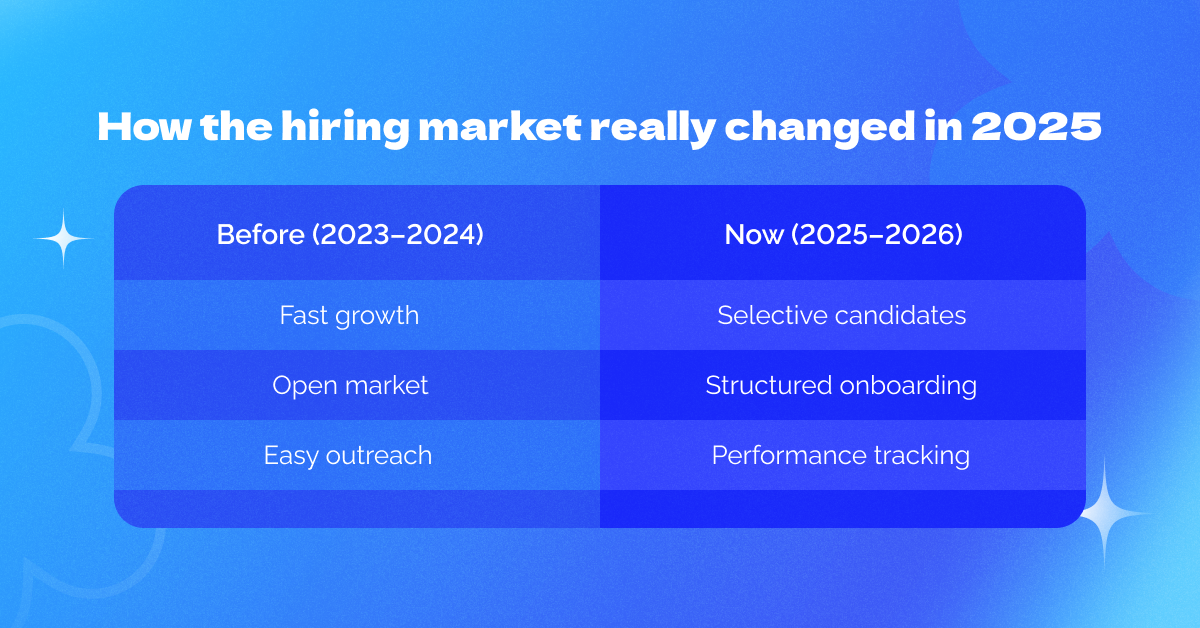
In short, the market is now more mature, tech-driven, and less open.
It used to be simple to get candidates on a call, but now it takes 2-3 attempts and a very targeted message just to start a conversation. Companies are putting more effort into keeping their people than finding new ones, and internal development and retention programs are finally showing results.
At the same time, sourcing candidates has become easier. There are more relevant platforms such as ArbiHunter, AI tools speed up screening, and LinkedIn has become a true work tool instead of just a showcase.
The biggest change is the shift from hiring to onboarding and retention. Recruiters are no longer measured only by how quickly they fill a role. Companies now look at how new hires perform in their first three to six months and what HR does to help them stay.
"The recruiter's KPI is no longer just 'close the position.' It's now tied to how that employee performs in their first 3–6 months."
From Offer to Day 90: Where Companies Actually Lose People
HarmonyHR's data shows the same trend. In high-risk industries like iGaming and crypto, the real challenge is not just getting a signed offer, but making sure new hires stay for the first 90 days.
According to HarmonyHR's 2025 data, companies with a structured onboarding process keep 34% more employees after 90 days than those using spreadsheets and chats.
Without a single digital system, the same problems come up:
- No clear 30/60/90-day plan for the role.
- Tasks and goals scattered across messengers.
- Feedback never logged, so "quality of hire" becomes subjective.
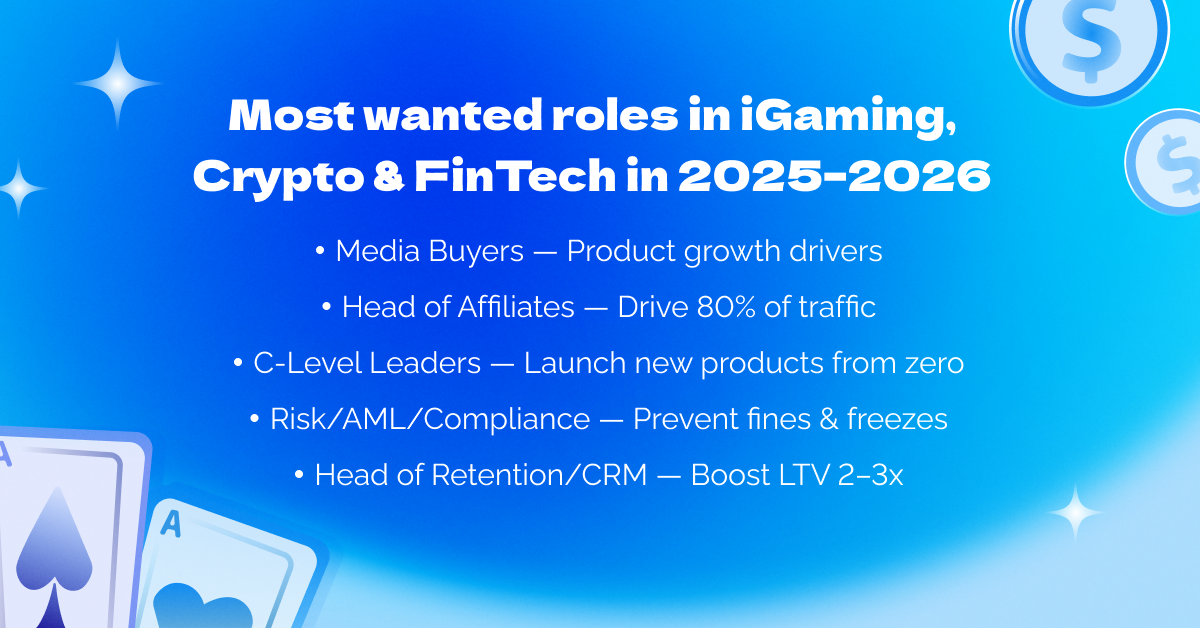
- Media Buyers: Demand is consistently high because product growth depends directly on them.
- C-Level Leaders: The market for new products is growing, and it needs leaders who can launch a new direction from scratch.
- Head of Affiliates
- Head of Retention/CRM
- Risk/AML/Compliance & Payments/PSP
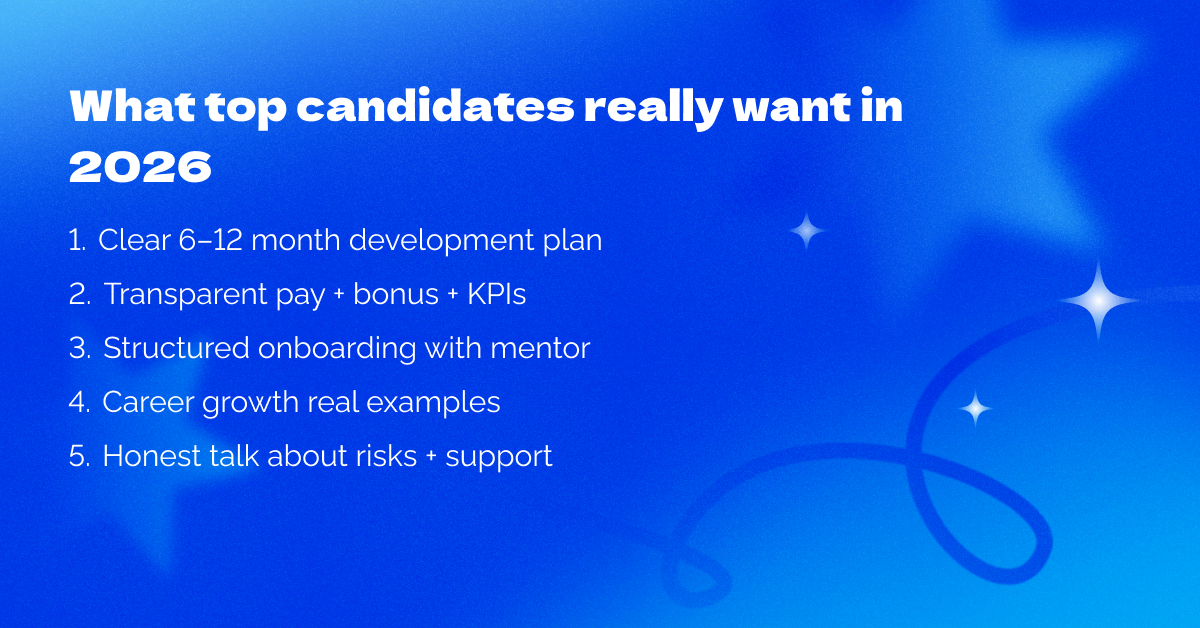
- A specific development plan for the next 6–12 months.
- A transparent financial system (salary + bonus + KPIs).
- Real examples of career growth within the company.
- Former employers delaying or withholding pay — this is the #1 reason for employee burnout.
- Petty, superficial judgments: hair color, t-shirt, zodiac sign, comments on appearance. Yes, this still happens.
- One candidate was even rejected for blinking too much.
- There's humor, memes, and lively discussion on calls.
- There's a human approach, not a "cog in the machine" mentality.
- There's a sense of belonging to something bigger.
- Is there a right to fail?
- How are processes structured?
- What happens when everything goes wrong?
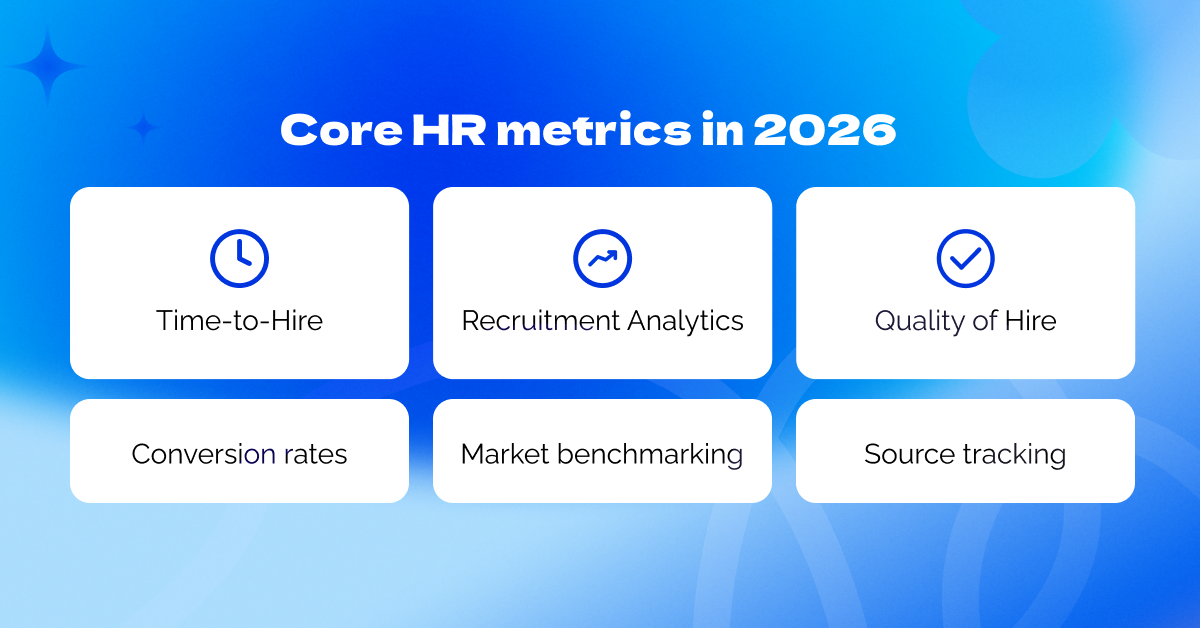
- Time-to-hire: The speed of closing roles.
- Quality of hire: How well the new employee meets expectations at the 3–6 month mark.
- Recruitment analytics: Conversion rates, application sources, etc.
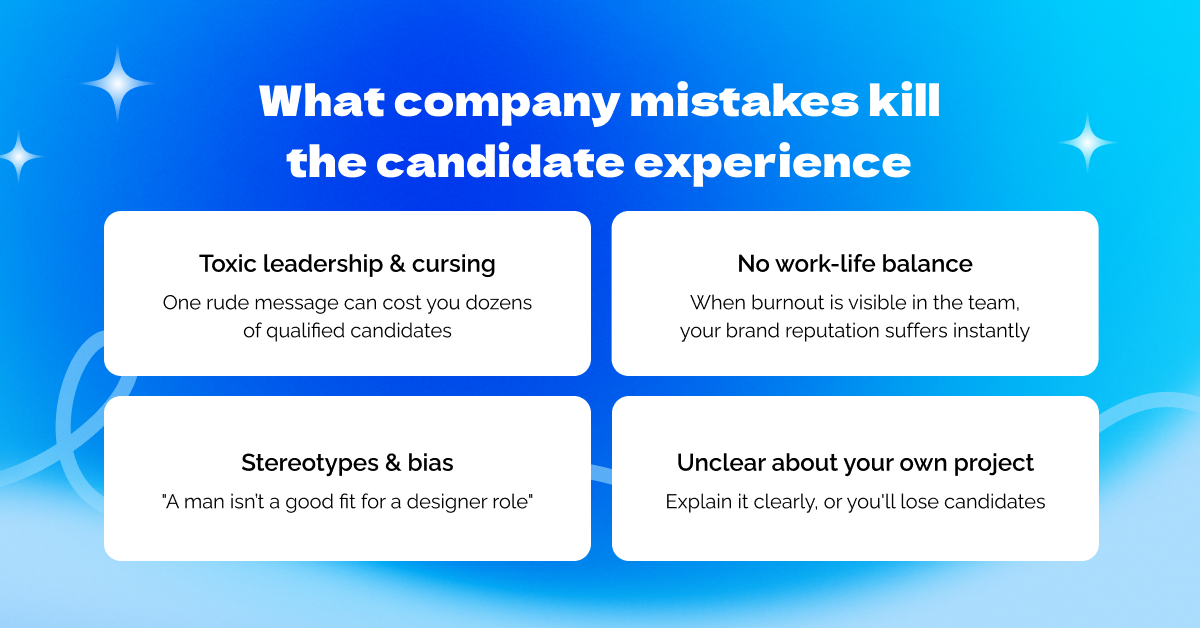
- Cursing and toxic behavior from leadership.
- Stereotypes ("A man isn't a good fit for a designer role," "She's too young").
- A total lack of work-life balance.
- When the interviewer doesn't even understand their own project, the candidate loses respect instantly.
- A clear development plan for 3–6 months.
- Clear KPIs and a defined area of responsibility.
- The employee must understand what "a good job" looks like and what is expected of them.
- AI & Data-Driven Recruiting: Automated screening, predictive analytics, and candidate scoring.
- KPI-Driven Performance Reviews: Results over subjective feelings.
- Focus on Retention: Not just hiring, but "activating" a person within the culture.
- Autonomous Teams: Small "squads" with their own vibe, a clear mission, and autonomy.
- Team-building and real (offline or online) connections.
- A corporate culture with a genuine, authentic vibe.
- Shared goals where "one cannot succeed without the other."
- Social impact initiatives—charity as part of the employer brand.
- Attract (niche platforms like ArbiHunter, networking, referrals);
- Hire (agencies like Lenkep);
- Onboard & retain (HRIS platforms like HarmonyHR);
- Grow & repeat (scaling what works instead of restarting from scratch).
- Lenkep Recruitment is a specialist hiring partner for fast-growing companies in the iGaming recruitment market and across crypto and fintech.
- HarmonyHR is an HR system used by regulated, high-risk industries to run onboarding, performance and retention in one place.
A basic HRIS system like HarmonyHR changes this: it gives one place for employee profiles, tasks, and goals, automates onboarding with checkpoints at week one, day 30, 60, and 90, and reminds managers to give feedback and confirm probation results.
If you're just starting to evaluate HR tech, our guides on what an HRIS is (21 must-have features) and what an HR system is and how to implement it can help you choose and roll out the right platform before you scale hiring.
"We see a clear shift in our HRIS data — companies that treat onboarding as part of performance management, not admin, have the lowest turnover rates." — Dmitriy Demkov, CEO at HarmonyHR
The Most Wanted Roles in iGaming, Crypto, and FinTech in 2026
Across the iGaming recruitment market, as well as crypto and fintech, some roles remain consistently in demand:
In iGaming, the need for leads keeps growing. Lenkep's iGaming salary and org structure research shows these roles are key in the first three to six months of a casino's growth:
This role drives up to 80% of the traffic for a new startup casino. The demand for strong affiliate leaders is high, but the talent pool is small.
Responsible for repeat visits and loyalty. Without this function, LTV drops by 2-3x, and acquisition costs are never recouped.
They are critical for stability, preventing account freezes and massive fines.
Taken together, this creates a very specific pressure on the iGaming recruitment market: the most business-critical roles are exactly where the talent pool is the thinnest.
Traditional job boards and generic channels simply don’t work fast enough for these hires.
A New Infrastructure for Affiliate & Media-Buying Talent: ArbiHunter
To solve this bottleneck, the market is starting to build dedicated infrastructure for performance and affiliate talent.
Lenkep Recruitment has become a co-owner of ArbiHunter, a job platform for traffic arbitrage and affiliate roles. Together, they are creating a single place for employers and performance talent, making hiring faster and opening up more opportunities for roles like Media Buyers and Heads of Affiliates.
Companies can also post two free vacancies per month on ArbiHunter.
What Top Candidates Really Want in 2026
Growth and transparency are the main factors.
Candidates want to see:
A structured onboarding program with a mentor and access to training materials is a massive selling point. People value companies that invest in them from day one. They also want a clear "sphere of influence" on metrics, where they feel they are more than just "filling a role."
HarmonyHR's analytics show that companies who document these plans in their system improve offer acceptance by 28% because expectations are clear and visible.
A surprisingly strong motivator is an honest conversation about the risks. Top candidates appreciate it when a company is upfront about challenges and offers support like a mentor, access to data, regular check-ins, and quick feedback.
"Strong candidates appreciate an honest conversation about the risks. They want to know what's broken and how you'll help them fix it."
The Mistakes That Still Ruin Hiring in High-Risk Industries
Candidates often share their negative experiences with Lenkep:
But there are positive stories too. In one interview, the client and candidate sang songs together, and the candidate accepted the offer. Those two are definitely on the same wavelength.
These stories show that the human element still matters, and sometimes the "vibe" is more important than skills.
Average Time-to-Hire in 2026: Why Speed Still Wins
Currently, it's about 3 weeks from first contact to offer. In the summer, it was closer to 4 weeks, but things accelerate in the autumn.
For C-level hires, it's 5–6 weeks. But if the process is transparent, you can close faster. Sometimes, a decision must be made in a few days. Speed wins.
A great example from our colleagues at SoftSwiss: they implemented "one-click recruiting." They give feedback in 24 hours and an offer in 2–3 days, which increased their offer acceptance rate by 37%.
The New Reality of Remote and Hybrid Work
Many companies want people back in the office, especially for mid- and senior-level roles. Remote work remains the default for tech roles, but hybrid is the new standard.
HR leaders are adapting their wellness programs to international standards: insurance, psychological support, and mindfulness sessions are now the basic package. An office 24/7 is losing the war for talent.
Much depends on the founder's flexibility. If they are open, the work format stays flexible.Teams then negotiate not about the number of days in the office, but about which tasks require in-person collaboration and how to schedule that in advance.
"Remote work remains the default for tech roles, but hybrid is the new standard."
How Culture Became the Core of Retention
People want to be part of a team where:
In international teams, humanity, informal connections, and a sense of purpose are especially important. If a company openly talks about its values, support systems, and especially its charity work, it's a real plus.
Candidates are now asking how the team lives its values in their daily routine:
HarmonyHR often sees this reflected in engagement surveys and feedback modules: teams with a clear "right to fail" culture show higher participation, more honest feedback, and better long-term retention metrics.
"Candidates are no longer asking what your values are. They're asking, 'Is there a right to fail here?'"
For more on how culture and processes impact turnover and retention, you can explore Employee Turnover in 2026 guide and The 2026 benefits shortlist — they give practical levers HR can pull.
The Core Recruitment Metrics for Modern HR Teams
Modern recruitment and HR teams track a tighter set of metrics:
Clients always demand results in numbers during the search. At Lenkep, we start every project with a market analysis: who is hiring, on what terms, and how long it's taking to fill similar roles. This has become the industry standard.
What Company Mistakes Kill the Candidate Experience?
A bad experience destroys your reputation. One bad review in a Telegram chat can cost you dozens of qualified applications. Companies that give short, concrete feedback and don't change the offer at the last minute see applications rise.
What's Next: AI, Retention, and Data-Driven HR Systems
75% of HR specialists call hiring and retention their biggest problem. The most important thing is structured onboarding:
A strong feedback culture (regular performance reviews, transparent metrics, training) is key. When you have this, the risk of early burnout drops dramatically.
The Key HR Trends for 2026
AI helps filter the noise, but the quality of the interview and the quality of the tasks are what seal the deal.
For a deeper dive into AI in HR, see our special interview "AI, Burnout, and Cargo Cult: Andrey Zhurauleu (BotConversa HRD) on the Challenges for HR in 2026."
Advice for HR Leaders in 2026
Invest in people and atmosphere, definitely not in a new office coffee machine. Invest in a sense of belonging.
The main investments should be:
Small wins and strong internal communication are far more powerful than perks. Merch, coffee, and benefits are all secondary if you don't have that core connection of purpose, people, and clear rules of the game.
"Invest in people and atmosphere, definitely not in a new office coffee machine. Merch and perks are secondary to a sense of purpose."
The Complete Hiring Loop: From Offer to Retention
In 2026, hiring in high-risk industries like iGaming and crypto is no longer a linear process. It's a loop:
In this report, we've combined several perspectives on the same hiring reality:
Together, we've combined front-line recruitment experience with HRIS data to show what's really changing in hiring for 2026.
FAQ
What are the most in-demand roles in iGaming and crypto in 2026?

The most in-demand roles include Media Buyers and Heads of Affiliates (who drive most early traffic for new casinos), Heads of Retention/CRM (who protect LTV) and Risk/AML/Compliance and Payments/PSP roles, which are critical for stability and preventing fines or account freezes.
What do top candidates in iGaming, crypto and fintech want in 2026?
Top candidates look for clear development plans for 6–12 months, transparent compensation structures (salary, bonus and KPIs), real internal growth examples and a structured onboarding program with a mentor and training. They also value honest conversations about risks and a clear "sphere of influence" on core metrics.
What is a good time-to-hire benchmark in these industries?
For most roles, around three weeks from first contact to offer is a solid benchmark, with C-level roles typically taking 5–6 weeks. Companies that provide fast feedback and transparent processes — like SoftSwiss with "one-click recruiting" and 24–72 hour decisions — can beat the market and significantly increase offer acceptance.
How can HRIS systems improve onboarding and retention after the offer?
An HRIS like HarmonyHR centralises employee profiles, tasks and goals; automates 30/60/90-day onboarding checkpoints; and reminds managers to give feedback and confirm probation. HarmonyHR's data shows companies with structured, system-driven onboarding keep significantly more employees past the first 90 days and improve offer acceptance when development plans and expectations are documented and visible.