Chapter 09. First Contact

How to use this chapter
Use this chapter after the candidate has already been selected by facts. It does not fix poor search relevance, but it helps avoid losing a good candidate with a weak, generic, or pushy message.
Remember in one phrase
The first message should quickly show why you wrote to this person and why the next step may be relevant.
If you have a task
| If you have a task | Go to section | What you get |
|---|---|---|
| Understand why there are no replies | Why candidates do not respond | A diagnosis before rewriting the text |
| Check a message | First-message quality checklist | Criteria before sending |
| Reply without pressure | Reply scripts | Wording for different reactions |
| Run a warm pool | Warm pool tracker | A way not to lose candidates |
Diagnostics
| Symptom | Likely problem | What to fix |
|---|---|---|
| Few replies | Subject line, trust in sender, or text | Improve the first line and relevance |
| 'Why did you message me?' | Weak personalisation | Add the link between profile and role |
| Many salary questions | Compensation is the key filter | Give a range or explain the process |
| There are interested replies but few qualified candidates | Low search relevance | Clarify the scorecard |
| Candidates disappear after replying | Slow handoff or process | Improve SLA and candidate updates |
First-message quality checklist
- Specific reason for outreach.
- Clear role context.
- Value from the candidate's point of view.
- Honest information.
- One simple next step.
- No fake urgency.
- No exaggerated praise.
- No unsupported claims.
- A respectful way to decline.
Warm pool tracker
| Candidate | Status | Motivation | Next trigger | Last contact | Next action |
|---|---|---|---|---|---|
| Name | Not ready yet | Leadership role remote | New lead role | 14 Jun | Return in 90 days |
What to take from the chapter / where to go next
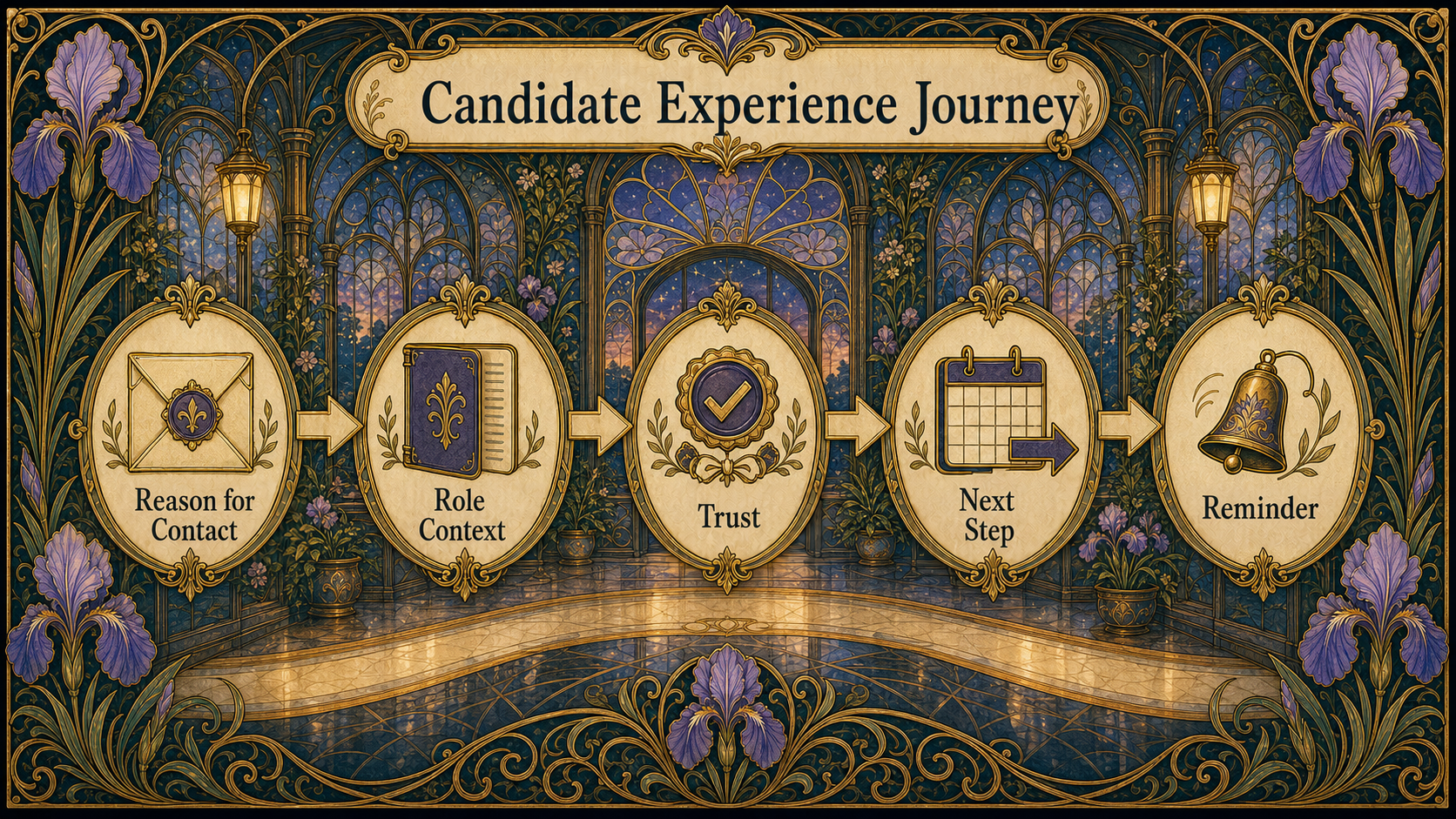
Take a contact system: fact, relevance, soft next step, respect for refusal, and clear database status. If the candidate replied or reached initial qualification, go to Chapter 10.